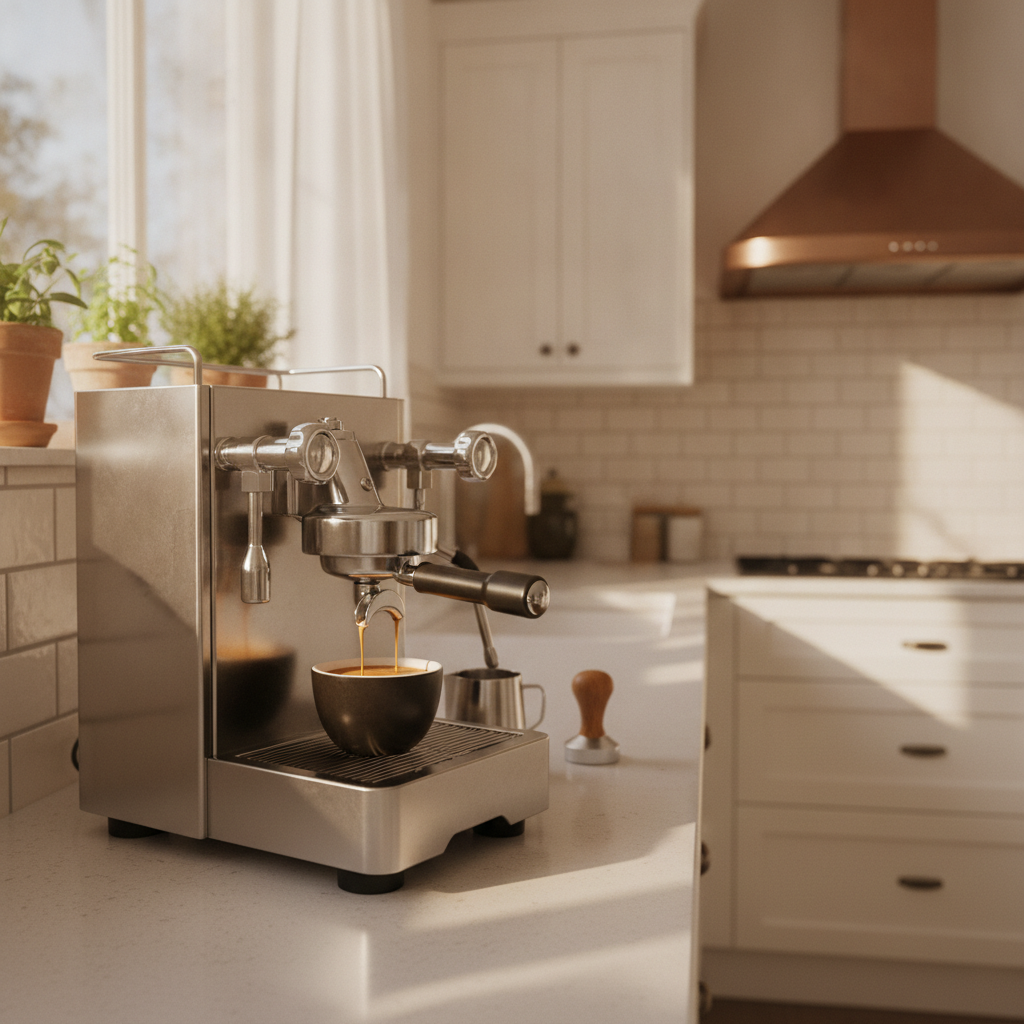
Best Espresso Machines Under $1,000 (2026)
Under a thousand dollars is the sweet spot in home espresso: real steam wands, real pressure, and shots that genuinely rival your local cafe, without crossing into prosumer territory. The catch is that these machines are built for very different people. Some hold your hand, some hand you the controls. We compared the five that consistently earn their keep, and matched each to the person it's actually for.
At a glance
| Machine | Type | Grinder | Pressure | Water tank | Best for |
|---|---|---|---|---|---|
| Breville Barista Express | Semi-automatic | Built-in conical burr | 15 bar | 67 oz | Beginners who want one box |
| Gaggia Classic Pro | Semi-automatic | None (buy separately) | 15 bar (moddable to 9) | 72 oz | Hands-on learners |
| Breville Bambino Plus | Semi-automatic | None (buy separately) | 15 bar | 64 oz | Tight counters, busy mornings |
| De'Longhi La Specialista Arte | Semi-automatic | Built-in conical burr | 15 bar | Removable | Looks + grinder in one |
| Rancilio Silvia | Semi-automatic | None (buy separately) | 15 bar | 67 oz | Serious enthusiasts |
Breville Barista Express
The reason this machine is everywhere: it has a built-in grinder, so you go from beans to shot in one footprint with no separate purchase. It's forgiving enough for a total beginner and capable enough to grow into. If you want one machine that just works and don't want to think about it, start here.
Pros
- All-in-one: grinder included
- Very beginner-friendly
- Strong resale value
Cons
- Plastic-y in spots
- Single boiler: no simultaneous steam + brew
Gaggia Classic Pro
A metal-bodied, endlessly-moddable classic that rewards people who like to learn. No built-in grinder, so budget for one, but the shots it pulls once dialed in punch well above its price. The machine enthusiasts keep for a decade and upgrade piece by piece.
Pros
- Commercial steam wand
- Hugely upgradeable
- Solid metal build
Cons
- No grinder included
- Steeper learning curve
Breville Bambino Plus
Tiny footprint, fast heat-up, and an automatic milk steamer that froths to your chosen temperature while you do something else. No grinder, but if counter space is tight and mornings are rushed, nothing here is faster or smaller.
Pros
- Heats in ~3 seconds
- Auto milk steaming
- Smallest footprint here
Cons
- No grinder
- Small water tank
De'Longhi La Specialista Arte
A built-in grinder and a manual steam wand in a genuinely handsome package. It splits the difference between the hand-holding Breville and the bare-bones Gaggia, and it looks more expensive than it is sitting on the counter.
Pros
- Grinder included
- Manual wand for latte art
- Premium styling
Cons
- Grinder less refined than standalone
- Bulkier
Rancilio Silvia
A brass-boilered tank built like commercial gear, with the same portafilter many cafes use. No grinder, no automation, no compromises on the shot. For the person who's decided espresso is a real hobby and wants a machine that will never be the limiting factor.
Pros
- Commercial-grade boiler
- Cafe-quality steam
- Lasts decades
Cons
- No grinder
- No hand-holding at all
- Top of the price range
How to choose
Do I need a built-in grinder?
Fresh-ground beans matter more to shot quality than almost anything else. A built-in grinder (Breville, De'Longhi) keeps it simple and one-box. Buying a separate grinder (for the Gaggia, Bambino, or Silvia) costs more up front but usually grinds better and lets you upgrade either piece independently. Beginners are happier with built-in.
Single boiler vs. simultaneous steam and brew
Every machine on this list is a single boiler, meaning you brew, then switch to steam. That's fine for one or two drinks. If you're making milk drinks for a whole household every morning, the wait adds up, but dual-boiler machines start well above this budget.
How much should I budget beyond the machine?
If the machine has no grinder, add roughly $150–$300 for a decent one. Either way, budget a little for a tamper, fresh beans, and a few weeks of learning. The shots get dramatically better once you dial in the grind.
Frequently asked questions
What's the best espresso machine under $1,000 for a beginner?
The Breville Barista Express. It includes a grinder, it's forgiving, and it gets a new user to a good shot faster than anything else here.
Which machine has the best shot quality?
The Rancilio Silvia, paired with a good grinder. It's the most 'serious' machine on the list and the one enthusiasts keep for years, but it offers no automation.
Do I really need to buy a separate grinder?
For the Gaggia, Bambino, and Silvia, yes, they don't include one, and a burr grinder makes a bigger difference to your cup than almost any other upgrade. The Breville and De'Longhi have grinders built in.