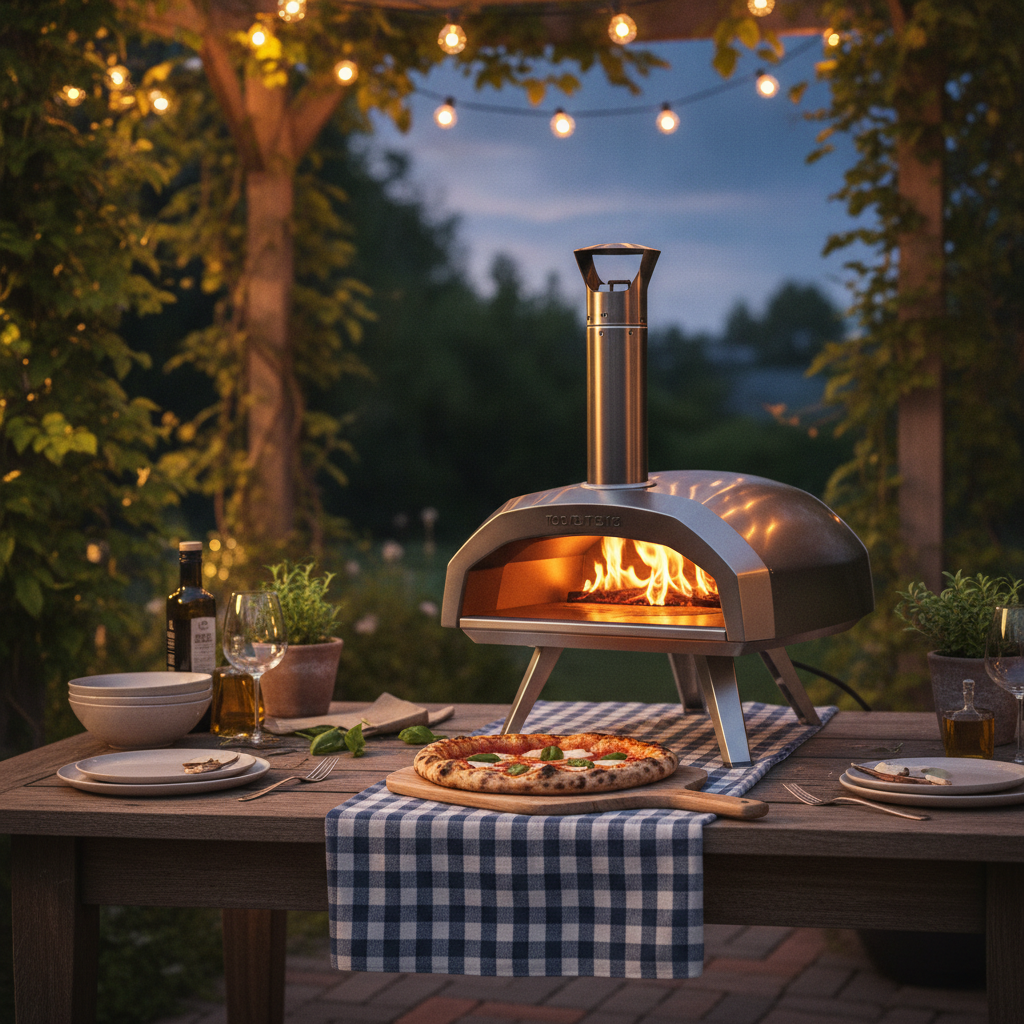
Best Pizza Ovens for the Backyard (2026)
Backyard pizza ovens in this roundup range from about $200 for a simple gas unit to $900 for a wood-fired setup with real mass and presence. They are for anyone who wants restaurant-style crust at home, whether that is a weeknight cook who values speed or a weekend host who wants the show of live fire. The biggest differences are fuel type, how hot the oven gets, and how easily it packs away. Gas ovens win on convenience and consistency. Wood-fired ovens win on flavor and spectacle but ask more of the cook. We picked five real ovens that each serve a different kind of backyard cook.
At a glance
| Machine | Fuel | Max temp | Cook time | Portability | Best for |
|---|---|---|---|---|---|
| Ooni Koda 16 | Propane gas | About 950°F | 60–90 seconds per pizza | Foldable legs, moderate weight | Weekly use and family-size pies |
| Gozney Roccbox | Propane gas, wood attachment optional | About 950°F | 60–90 seconds per pizza | Insulated carry design, built to travel | Tailgating and taking the oven on the road |
| Solo Stove Pi Prime | Dual gas and wood | About 900°F | 90–120 seconds per pizza | Lightweight, easy to carry | Budget-friendly first pizza oven |
| Ooni Karu 16 | Wood or charcoal, gas attachment optional | About 950°F | 60–90 seconds per pizza | Foldable legs, heavier build | Authentic wood-fired flavor and versatility |
| Bertello Outdoor Pizza Oven | Wood, charcoal, or gas attachment | About 800°F | 2–3 minutes per pizza | Compact and lightweight | Trying out pizza ovens without a big investment |
Ooni Koda 16
The Koda 16 hits the balance most backyard cooks actually want: near-instant gas ignition, enough heat to char a crust in under two minutes, and a footprint that does not take over the patio. It runs on a standard propane tank so there is no fuss with wood or pellets, which means you can go from cold to cooking in about 20 minutes. The larger 16-inch stone fits a proper family-size pie instead of the smaller personal pizzas some tabletop ovens are limited to. For most households, this is the one that gets used every week instead of gathering dust.
Pros
- Fast, consistent gas heat with no wood fuss
- 16-inch stone fits full-size pizzas
- Quick heat-up time for weeknight use
Cons
- Lacks the smoky flavor of wood-fired cooking
- Still needs a propane tank on hand
Gozney Roccbox
The Roccbox was built to travel, with a heavy-duty silicone jacket and a fold-down leg design that turns it into something close to a suitcase. It runs on gas by default with a wood-burning attachment available, so you get flexibility without buying a second oven. Heat retention is excellent thanks to its dense stone and insulated shell, meaning it holds temperature well even in a stiff breeze. Campers, tailgaters, and anyone who cooks pizza at more than one address will get the most out of this one.
Pros
- Genuinely portable with a carry-friendly build
- Holds heat well in windy conditions
- Optional wood attachment adds flexibility
Cons
- Smaller stone than some full-size ovens
- Wood attachment sold separately
Solo Stove Pi Prime
Solo Stove's Pi Prime brings a dual-fuel design to a lower price than most gas ovens in this class, letting you switch between a gas burner and a wood tray depending on the mood. The build is simple and lightweight, which keeps the price down without feeling cheap. Heat is plenty hot for a proper Neapolitan-style crust, though the smaller stone means cooking one pizza at a time. For a first pizza oven or a budget-conscious backyard setup, this is the easiest recommendation.
Pros
- Dual-fuel flexibility at a lower price
- Lightweight and easy to move around
- Simple to light and maintain
Cons
- Smaller cooking stone than premium options
- Slightly longer cook time per pie
Ooni Karu 16
The Karu 16 is built for cooks who want real wood smoke in the crust and do not mind tending a small fire to get it. It runs primarily on wood or charcoal, with a gas burner attachment available for nights when convenience wins out. The larger chamber holds heat well and handles more than pizza, including roasts and flatbreads. This is the oven for someone who sees live fire as part of the fun, not a hassle to avoid.
Pros
- Real wood-fired flavor and char
- Large chamber handles more than pizza
- Optional gas burner for convenience nights
Cons
- Wood fire takes more attention to manage
- Heavier and bulkier than gas-only ovens
Bertello Outdoor Pizza Oven
Bertello's oven is the most affordable way into this category without buying a toy. It supports wood, charcoal, or a gas attachment, giving new owners room to experiment with fuel before committing to one style. The stone is smaller and the build lighter than the premium ovens here, which shows in slightly less even heat retention. Still, for someone testing whether backyard pizza nights will stick, this is a sensible low-risk entry point.
Pros
- Lowest price point in this lineup
- Flexible fuel options to experiment with
- Compact enough for small patios
Cons
- Lower max temp than premium ovens
- Less even heat retention in wind
How to choose
Gas or wood: which fuel should I choose?
Gas is the better choice if you want consistent results with minimal fuss and plan to cook on weeknights. Wood brings genuine smoky flavor and a bit of theater, but it demands more attention to keep the fire steady.
How hot does a pizza oven actually need to get?
Neapolitan-style pizza wants somewhere around 850 to 950 degrees Fahrenheit to get that quick char in under two minutes. Ovens that top out closer to 700 or 800 degrees still make great pizza, just with a slightly longer cook time.
Do I need a dedicated pizza peel and stone care routine?
Yes, a metal launch peel and a perforated turning peel make a real difference in handling dough without disaster. Most stones also need to fully cool before cleaning to avoid cracking.
How much backyard space does a pizza oven really need?
Tabletop models need a sturdy table or stand and a few feet of clearance from siding or overhangs. Larger wood-fired units benefit from a dedicated outdoor kitchen counter or stand built for the weight.
Frequently asked questions
Can these ovens cook more than pizza?
Yes, most handle flatbreads, roasted vegetables, and even small roasts once you get comfortable managing the high heat.
How long does a pizza oven take to preheat?
Gas models typically reach cooking temperature in 15 to 20 minutes, while wood-fired ovens can take closer to 30 minutes to build a proper bed of coals.
Do I need special dough or can I use store-bought?
Store-bought dough works fine, though high-hydration dough handles the intense heat better and produces a more authentic charred crust.
Are these safe to use on a wood deck?
Always check the manufacturer's clearance guidelines and use a heat-resistant mat or stand, since some models run hot enough to scorch decking without one.