Best Stand Mixers (2026)
Stand mixers in this lineup range from about $200 for a compact everyday model to $500 for a heavy-duty machine built for daily bread dough. They are for bakers who have outgrown a hand mixer, whether that means a couple of batches of cookies a month or full loaves of bread every week. The real differences come down to bowl capacity, motor strength, and how deep the attachment ecosystem goes. A bigger motor matters more than most people expect once you try kneading a stiff dough. We picked five real mixers that each fit a different kind of baker and kitchen.
At a glance
| Machine | Bowl size | Motor/Wattage | Attachments | Style | Best for |
|---|---|---|---|---|---|
| KitchenAid Artisan Series 5-Quart | 5 quarts | 325 watts | Wide third-party and OEM ecosystem | Tilt-head | Versatile everyday baking |
| KitchenAid Professional 6000HD | 6 quarts | 575 watts | Compatible with KitchenAid hub ecosystem | Bowl-lift | Frequent bread and heavy dough |
| Cuisinart Precision Master 5.5-Quart | 5.5 quarts | 500 watts | Includes flat beater, whisk, dough hook | Tilt-head | Everyday baking on a budget |
| Smeg SMF03 50's Style | 4.8 quarts | 800 watts peak | Flat beater, whisk, dough hook included | Tilt-head | Style-forward kitchens |
| Hamilton Beach Electric Stand Mixer | 4 quarts | 300 watts | Flat beater, whisk, dough hook included | Tilt-head | Light, occasional baking |
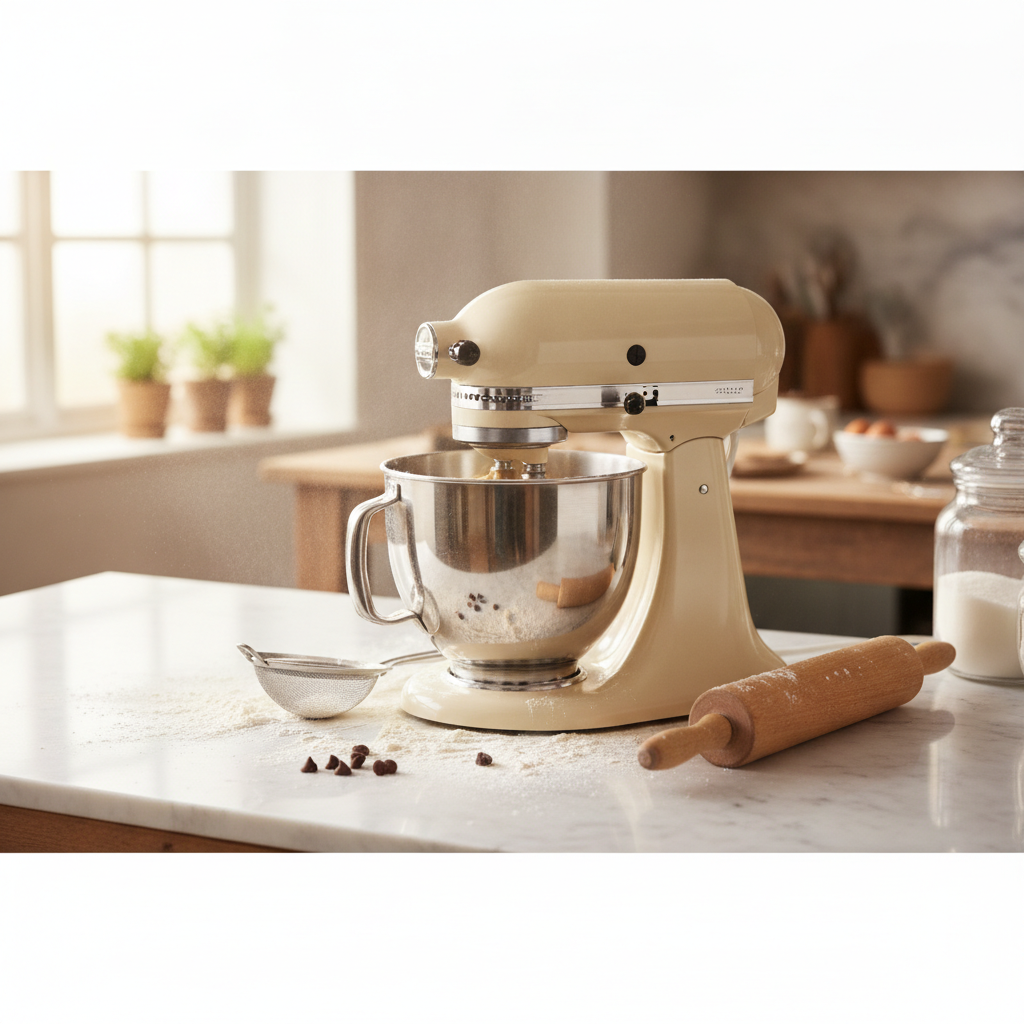
KitchenAid Artisan Series 5-Quart
The Artisan is the mixer most people picture when they think stand mixer, and it earns that reputation with a sturdy tilt-head design and a huge attachment ecosystem covering everything from pasta rollers to meat grinders. The 5-quart bowl handles everything from a single batch of cookies to a decent-sized bread dough without strain. It is not the cheapest option here, but the build quality and resale value make it a mixer people keep for a decade or more. For most home bakers, this is the safe, versatile choice.
Pros
- Enormous attachment ecosystem
- Iconic build quality that lasts for years
- Compact enough for most counters
Cons
- Motor is modest for very stiff bread dough
- Higher price than basic hand-mixer alternatives
KitchenAid Professional 6000HD
The 6000HD swaps the tilt-head for a bowl-lift design and a beefed-up motor built to handle stiff, high-hydration bread dough without bogging down. The larger bowl capacity means fewer batches when baking for a crowd or stocking a freezer with loaves. It is heavier and takes up more counter space than the Artisan, which is the tradeoff for the extra muscle. Serious bread bakers who knead dough weekly will notice the difference immediately.
Pros
- Strong motor handles stiff dough with ease
- Larger bowl for bigger batches
- Bowl-lift design feels more stable under load
Cons
- Bulkier and heavier on the counter
- Overkill for light, occasional baking
Cuisinart Precision Master 5.5-Quart
Cuisinart's Precision Master delivers a genuinely large bowl and a solid attachment hub at a price well under the premium brands. It handles everyday mixing tasks, from cookie dough to whipped cream, without complaint, and the included attachments cover most home needs out of the box. It will not match the motor strength of the priciest bread-focused mixers, but for typical weekend baking it is more than capable. This is the pick for anyone who wants a real stand mixer without the premium price tag.
Pros
- Large bowl capacity for the price
- Comes with a solid attachment set included
- Strong value against premium brands
Cons
- Attachment ecosystem is smaller than KitchenAid's
- Not ideal for daily heavy bread dough
Smeg SMF03 50's Style
Smeg's mixer is for the baker who wants their kitchen counter to look like a magazine spread, and it delivers with retro curves and a range of standout colors. Performance is solid for everyday mixing tasks, though it is not marketed as a heavy-duty dough machine the way some competitors are. The bowl size is respectable and attachments cover the basics. If countertop appeal matters as much as function, this is the mixer that gets complimented.
Pros
- Standout retro design in multiple colors
- Solid everyday mixing performance
- Comes with core attachments included
Cons
- Smaller third-party attachment ecosystem
- Premium price partly reflects design, not just power
Hamilton Beach Electric Stand Mixer
Hamilton Beach's stand mixer is built for the baker who mixes a few times a month rather than every weekend, and it is priced accordingly. The bowl is a practical size for typical batches, and the tilt-head design makes swapping bowls and beaters simple. It will not keep pace with a heavy bread dough routine, but for cookies, cakes, and quick breads it gets the job done reliably. This is the sensible starter mixer before committing to a premium brand.
Pros
- Budget-friendly entry point
- Simple, straightforward tilt-head use
- Comes with the core attachments needed
Cons
- Motor struggles with stiff dough
- Smaller bowl limits batch size
How to choose
Tilt-head or bowl-lift: which style should I get?
Tilt-head mixers are easier to access and store, and they cover most home baking needs just fine. Bowl-lift mixers feel more stable under heavy loads like bread dough, which matters if that is a regular part of your baking.
How much motor power do I actually need?
For cakes, cookies, and light batters, 300 to 350 watts is plenty. If bread dough is a regular project, look toward mixers rated closer to 500 watts or more so the motor does not strain.
Is a bigger bowl always better?
Not necessarily. A larger bowl helps if you bake for a crowd or like to batch recipes, but it can feel oversized and harder to clean for small, everyday mixes.
Are third-party attachments worth considering?
If you already own or plan to buy a mixer with a wide attachment hub, accessories like pasta rollers or grain mills can genuinely expand what the machine does. It is one of the bigger long-term value factors in choosing a brand.
Frequently asked questions
Do stand mixers come with a warranty?
Most major brands offer at least a one-year warranty, with some premium models extending coverage further. Check the specific model before buying if this matters to you.
Can a stand mixer replace a food processor?
No, they serve different purposes. A stand mixer handles beating, whisking, and kneading, while a food processor is built for chopping, slicing, and pureeing.
How loud are stand mixers during use?
Most run at a moderate hum on lower speeds, with noise increasing noticeably at higher speeds or under heavy dough loads.
What size mixer is right for a household of four?
A 4.5 to 5-quart bowl comfortably handles most family recipes, including a standard batch of cookie dough or a loaf of bread.